

Durian: The 'King of Fruits' with Powerful Nutrition and a Bold Aroma
A tropical fruit with a strong smell and creamy flesh—rich in energy, fiber, vitamins, and antioxidants.
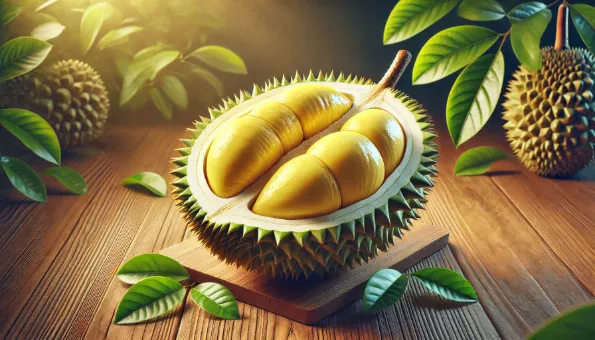
What is Durian?
Durian is a tropical fruit native to Southeast Asia, easily recognized by its spiky shell and pungent aroma. Its soft, custard-like flesh is beloved by many and avoided by others—hence its nickname, the 'king of fruits'.
Nutritional Value
- **Calories:** ~150 kcal/100 g
- **Carbohydrates:** ~27 g
- **Fat:** ~5 g (mostly monounsaturated)
- **Fiber:** 3–4 g
- **Key micronutrients:** vitamin C, B6, folate, potassium, magnesium
Health Benefits
- **Antioxidant-rich** (vitamin C and polyphenols) for immune and heart support.
- **Sustained energy** from complex carbs and healthy fats.
- **Fiber supports digestion** and gut health.
- **Contains tryptophan**, which may help mood and sleep.
Potential Drawbacks
Calorie-dense—enjoy in moderation. The strong smell can be off-putting. Some people experience gas or bloating.
How to Eat Durian
- Eat **fresh** as dessert.
- Blend into **smoothies, ice creams, and pastries**.
- Pair with **sticky rice or coconut milk** in classic Southeast Asian desserts.
Summary
Durian is uniquely aromatic and nutritionally dense—an energy-packed fruit with fiber and vitamins.
- 1. Durian
tropsko voće poznato kao 'kralj voća', bogato energijom, vlaknima i vitaminima, ali s izrazitim mirisom