


Gut & immunity after 40: fiber, fermented foods and the “barrier” (no extreme detox)
Your gut barrier and microbiome are part of your immune system. After 40, fiber and gentle fermented foods often help more than chasing supplements.
Your gut barrier and microbiome are part of your immune system. After 40, fiber and gentle fermented foods often help more than chasing supplements.

If you’re 40+, immunity isn’t just “vitamin C”. Steady blood sugar, a strong gut barrier, good sleep, and muscle mass build resilience day by day.

Your gut and microbiome love routine: enough fiber + a little fermented food a few times per week. This post explains prebiotics vs probiotics and how to start without bloating.
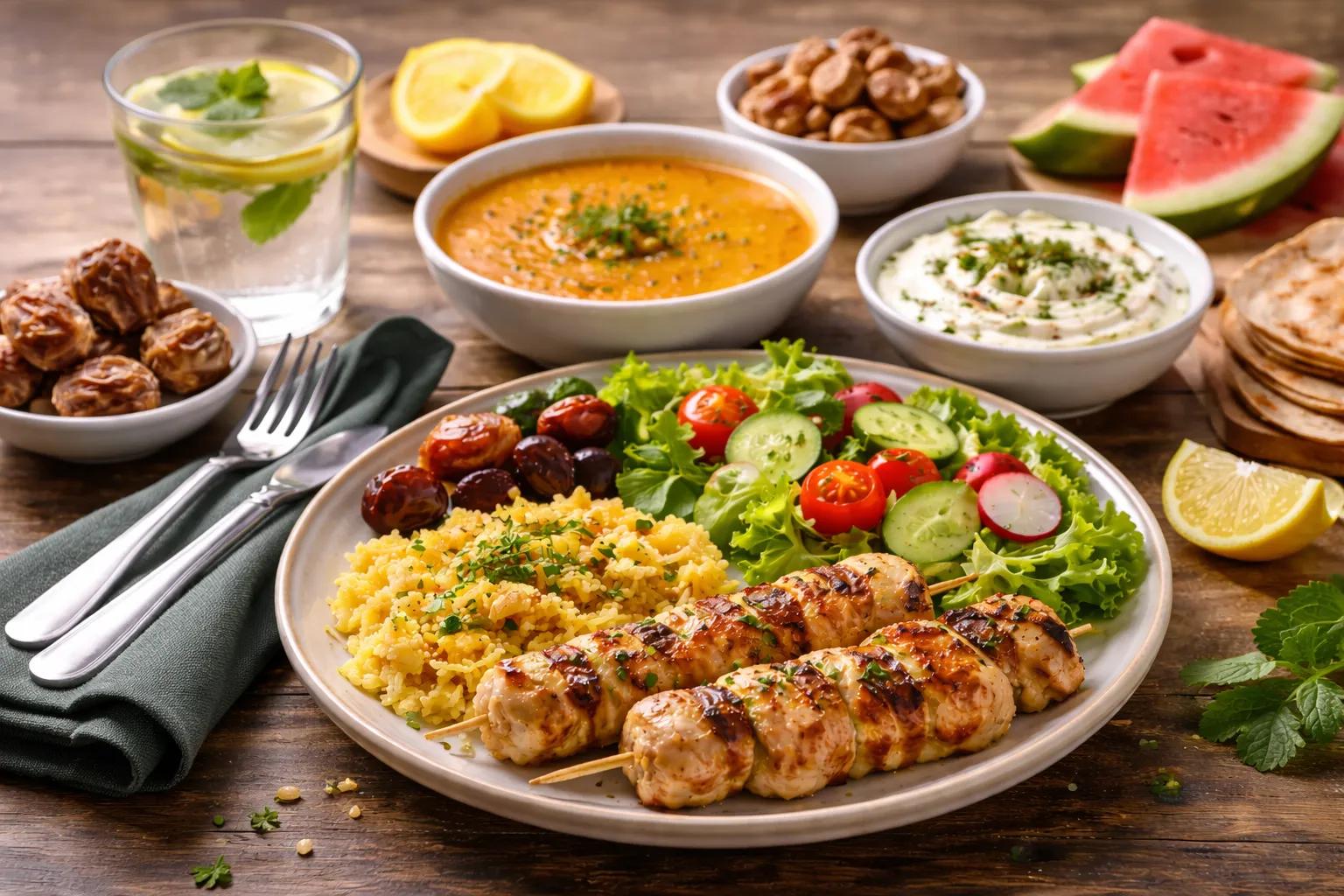
Iftar can be festive and satisfying without heaviness or heartburn.

Vegetable stock adds depth and aroma to soups, sauces, and risottos — a plant-based foundation for countless dishes. Explore Vegetable Stock nutrition facts, calories per 100g, health benefits, side effects, storage tips, and the best ways to use Vegetable Stock in recipes.

Black glutinous rice is a chewy, aromatic grain rich in antioxidants and iron — prized in Asian desserts and savory dishes alike. Explore Black Glutinous Sticky Rice nutrition facts, calories per 100g, health benefits, side effects, storage tips, and the best ways to use Black Glutinous Sticky Rice in recipes.

Orange blossom water adds a delicate floral aroma to pastries, puddings, and teas — a Mediterranean secret for balance and elegance. Explore Orange Blossom Water nutrition facts, calories per 100g, health benefits, side effects, storage tips, and the best ways to use Orange Blossom Water in recipes.

Pudding powder is a starch-based mix used to make creamy, smooth desserts in minutes — versatile for countless flavors and toppings. Explore Pudding Powder nutrition facts, calories per 100g, health benefits, side effects, storage tips, and the best ways to use Pudding Powder in recipes.

Chocolate chips bring sweetness and texture to cookies, muffins, pancakes, and desserts — melting into gooey perfection when baked. Explore Chocolate Chips nutrition facts, calories per 100g, health benefits, side effects, storage tips, and the best ways to use Chocolate Chips in recipes.

Crushed cookies add texture and flavor to cheesecakes, parfaits, and layered desserts — simple yet essential in modern baking. Explore Crushed Cookies nutrition facts, calories per 100g, health benefits, side effects, storage tips, and the best ways to use Crushed Cookies in recipes.

Chocolate is made from roasted cocoa beans and loved for its rich taste and texture. Explore Chocolate nutrition facts, calories per 100g, health benefits, side effects, storage tips, and the best ways to use Chocolate in recipes.

Powdered sugar, also called confectioners’ sugar, is finely ground sugar used for glazes, frostings, and dessert decoration. Explore Powdered Sugar nutrition facts, calories per 100g, health benefits, side effects, storage tips, and the best ways to use Powdered Sugar in recipes.

Digestive biscuits are semi-sweet whole wheat cookies that offer gentle crunch, fiber, and versatility in desserts like cheesecake. Explore Digestive Biscuits nutrition facts, calories per 100g, health benefits, side effects, storage tips, and the best ways to use Digestive Biscuits in recipes.

Ladyfingers are light, sponge-like biscuits that absorb coffee or liqueur, making them the foundation of many European desserts. Explore Ladyfingers nutrition facts, calories per 100g, health benefits, side effects, storage tips, and the best ways to use Ladyfingers in recipes.

Mascarpone is a rich Italian cheese with a smooth texture and mild, buttery flavor — perfect for tiramisu, sauces, and desserts. Explore Mascarpone nutrition facts, calories per 100g, health benefits, side effects, storage tips, and the best ways to use Mascarpone in recipes.

Water is vital for every function in the body — from regulating temperature to aiding digestion and detoxification. Explore Water nutrition facts, calories per 100g, health benefits, side effects, storage tips, and the best ways to use Water in recipes.

Sea bream is a lean, white fish rich in protein, omega-3 fatty acids, and minerals that support heart, brain, and immune health. Explore Sea Bream nutrition facts, calories per 100g, health benefits, side effects, storage tips, and the best ways to use Sea Bream in recipes.

Oatmeal cereal is a nutritious, high-fiber breakfast that supports heart health, digestion, and long-lasting energy. Explore Oatmeal Cereal nutrition facts, calories per 100g, health benefits, side effects, storage tips, and the best ways to use Oatmeal Cereal in recipes.

Barley cereal is a wholesome breakfast rich in fiber, vitamins, and minerals that support heart health and digestion. Explore Barley Cereal nutrition facts, calories per 100g, health benefits, side effects, storage tips, and the best ways to use Barley Cereal in recipes.

Corn flakes are toasted flakes made from corn, often fortified with vitamins and minerals. Explore Corn Flakes nutrition facts, calories per 100g, health benefits, side effects, storage tips, and the best ways to use Corn Flakes in recipes.