

Holy Basil (Tulsi): Aromatic Adaptogenic Herb
Peppery, clove-like leaves used in teas and cooking; rich in vitamin K, A, and antioxidants with calming, digestive support.
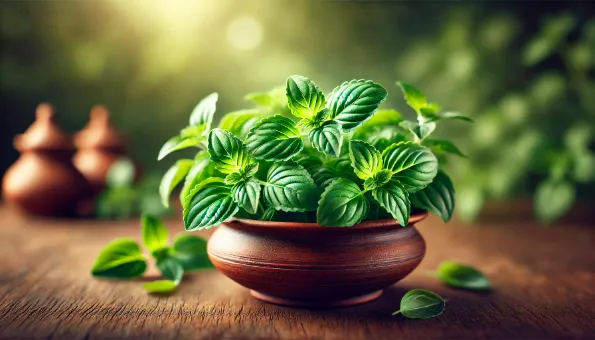
What Is Holy Basil (Tulsi)?
Holy basil (*Ocimum tenuiflorum*, also *O. sanctum*), known as **Tulsi**, is a revered herb in Ayurveda. Its leaves have a **peppery, clove-like aroma** and are enjoyed as tea or added fresh to dishes.
Nutrition (per 100 g fresh leaves, approx.)
- **Calories:** ~23 kcal
- **Carbohydrates:** ~3 g
- **Protein:** ~3 g
- **Fat:** ~0.6 g
- **Fiber:** ~1.6 g
- **Notable micronutrients:** **Vitamin K (very high)**, **Vitamin A**, **Vitamin C**, **Manganese**, **Calcium**, **Iron**
Potential Benefits
- **Antioxidants** support cellular protection.
- Traditionally used to **soothe digestion** and **calm stress**.
- **Vitamin K** contributes to normal blood clotting and bone health.
- **Aromatic oils** (eugenol-like) may offer antimicrobial effects.
Precautions
- May **interact with anticoagulants** (vitamin K) and **blood sugar medications**.
- Large amounts may upset sensitive stomachs.
- **Pregnant or breastfeeding individuals**: use **moderately** and consult a professional.
- Possible **allergy** in those sensitive to Lamiaceae (mint family).
Culinary Uses
- Steep **fresh or dried leaves** for **Tulsi tea**.
- Add at the end of cooking to **soups, curries, stir-fries** for a peppery lift.
- Pairs with **ginger, lemon, honey, coconut milk**.
- Use as a **fresh garnish** like other basils.
Summary
Tulsi is a fragrant, antioxidant-rich herb with a soothing reputation—delicious as tea and versatile in savory cooking.
- 1. Holy Basil (Tulsi)
Holy basil (Tulsi): list aromatične biljke *Ocimum tenuiflorum*/*O. sanctum*; karanfilasto-papreni tonovi; koristi se u čajevima, jelima i tradicionalnoj ajurvedi.