

Whole Wheat Flour: Nutritious Fiber-Rich Alternative to White Flour
Whole wheat flour retains the bran and germ, making it higher in fiber, vitamins, and minerals than refined flour.
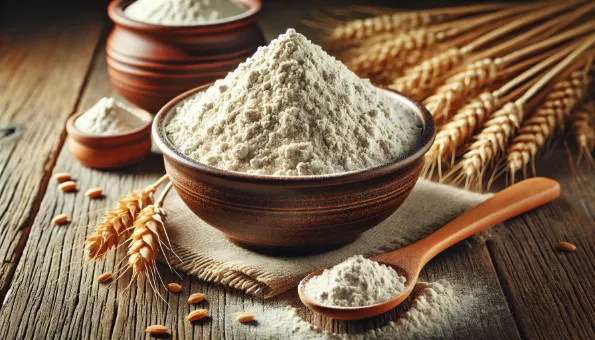
What Is Whole Wheat Flour?
**Whole wheat flour** is made by grinding the entire wheat kernel, including the bran, germ, and endosperm. This keeps most nutrients intact and gives it a nutty flavor and darker color.
Nutrition (per 100 g)
- **Calories:** 340 kcal
- **Carbohydrates:** 72 g
- **Protein:** 13 g
- **Fiber:** 10.7 g
- **Fat:** 2 g
- **Iron:** 3.6 mg
- **Magnesium:** 138 mg
Health Benefits
- High in **dietary fiber**, supporting digestion.
- Provides **complex carbohydrates** for steady energy.
- Rich in **B vitamins, iron, and magnesium**.
- May help with **heart health and weight management**.
Culinary Uses
- Used in **breads, pancakes, muffins, chapati, and pasta**.
- Can replace part of white flour in most recipes.
- Adds a **nutty taste and dense texture**.
Summary
Whole wheat flour is a wholesome, nutrient-dense choice for baking and everyday cooking.
- 1. Whole Wheat Flour
Whole wheat flour: integralno brašno napravljeno mljevenjem cijelog zrna pšenice, bogato vlaknima, vitaminima B skupine i mineralima.