


Carb Myths: Why Carbohydrates Aren’t the Enemy
Carbs don’t ruin fat loss by default. Type, portion size, and context matter more than fear-based rules.
Carbs don’t ruin fat loss by default. Type, portion size, and context matter more than fear-based rules.

How to organize food when you train: 1 hour of prep = 3 days of easier decisions. System: 2 proteins + 2 carbs + 2 veggies + 1 sauce.

What to eat after training for recovery, energy, and progress. A simple structure + examples.

A simple time-based system. Goal: energy without feeling heavy.

No overthinking: how to eat when you train 2–5x per week. Focus on protein, smart carbs, hydration, sleep, and a routine you can actually stick to.

Stress and poor sleep increase cravings and affect insulin. After 40, the best anti‑stress plan often starts with stable meals and small routines.

A practical 7‑day plan to stabilize blood sugar, increase protein and fiber, and add a few immune‑supportive habits without stress.

Muscle isn’t just aesthetics — it’s a metabolic organ. After 40, two short strength sessions per week plus enough protein often beat “cardio every day”.

Big blood sugar swings affect energy, appetite, and inflammation. After 40, steadier meals often mean steadier immunity too.

It’s not only what you eat — it’s also how you eat. This guide gives practical rules for meal rhythm, smart snacks, dessert without overdoing it, and coffee without added sugar.

From “how much protein do I need?” to “why is my meal prep dry?” — practical answers without extremes.

A smart meal prep system for 2–3 days. Mix and match 2 proteins, 2 sides and 2 sauces for 6–8 different plates.

The simplest way to build filling meals: protein + vegetables + smart carbs + sauce. No calorie counting required.
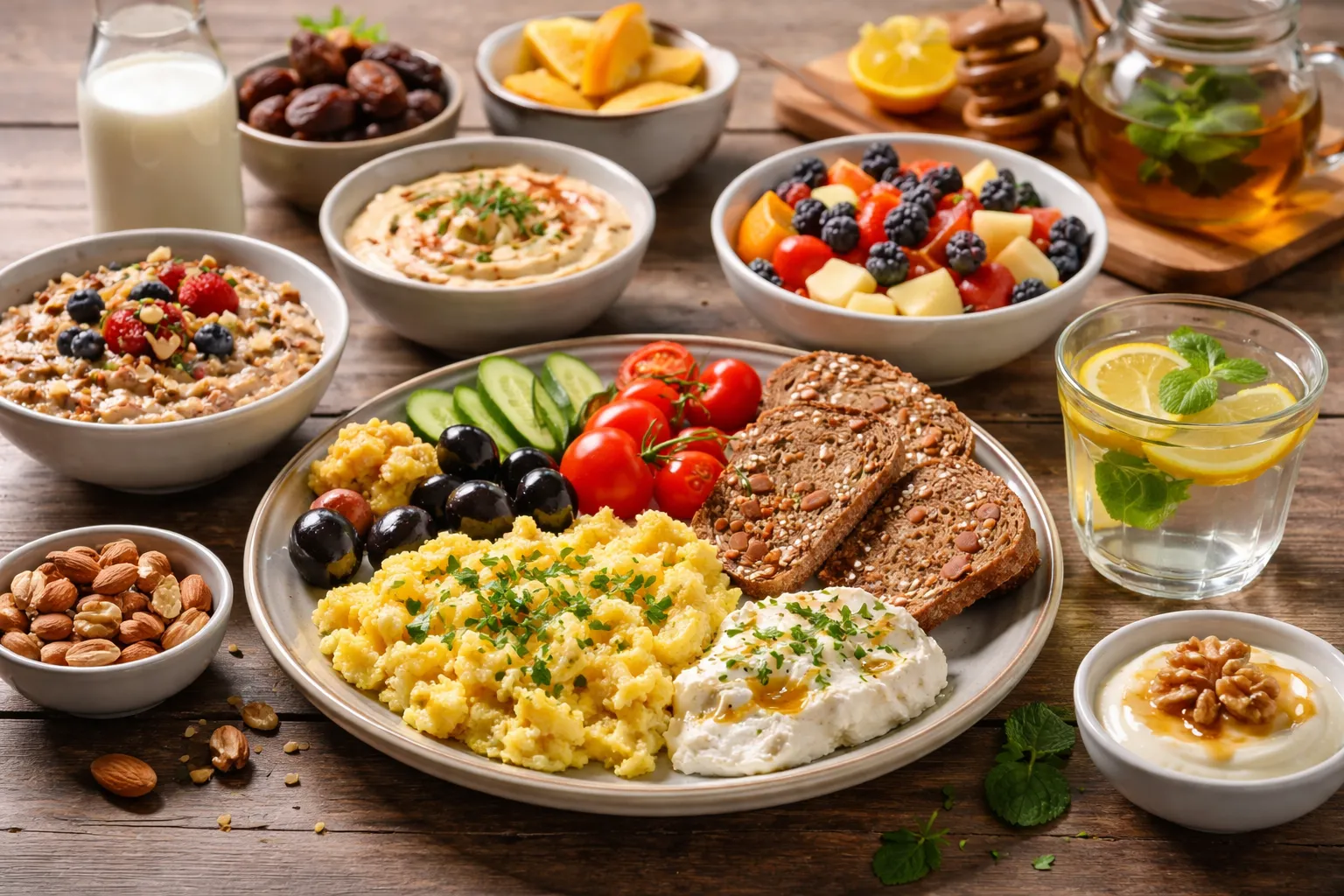
A well-balanced suhoor makes the fasting day easier: fewer crashes and less thirst.
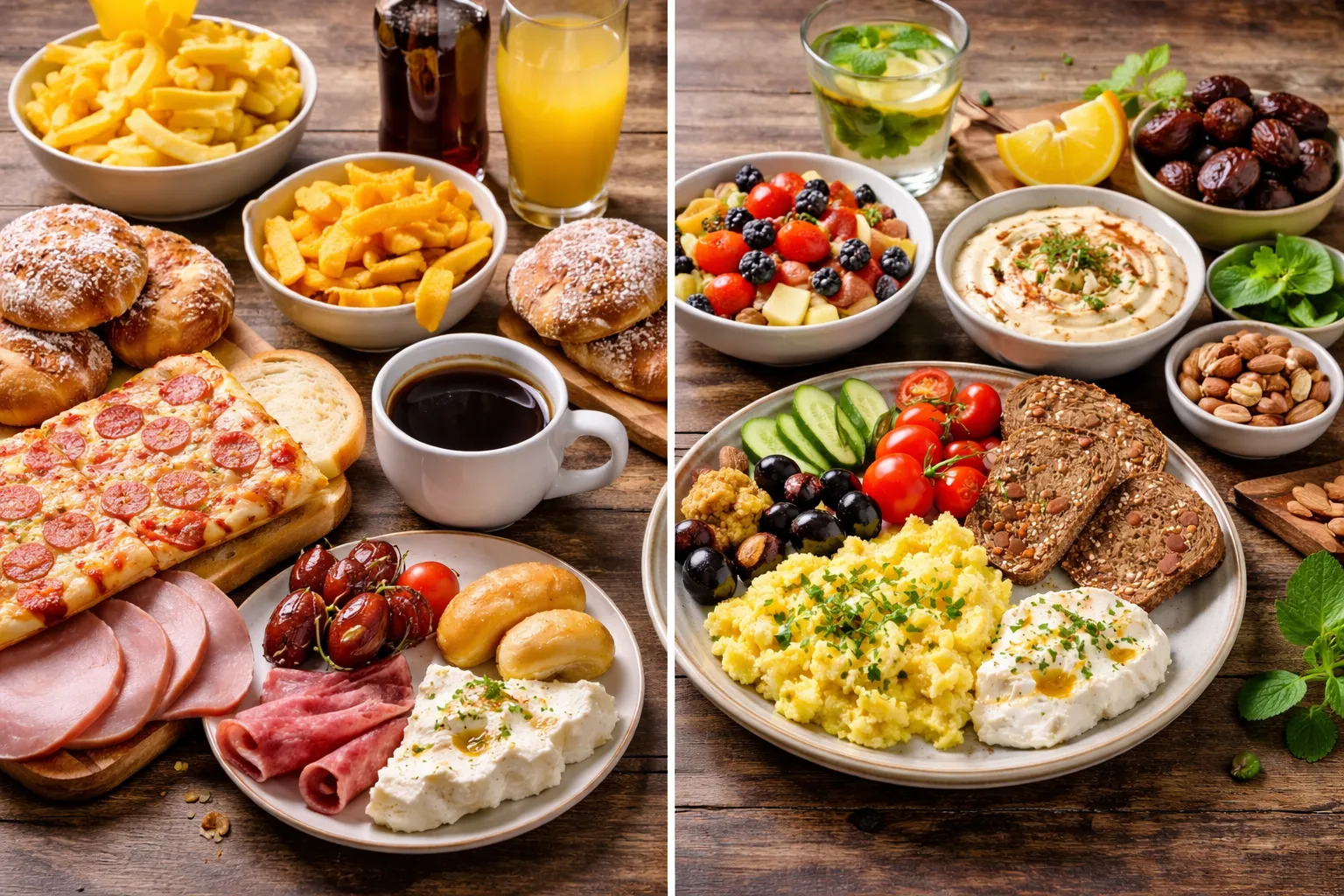
Some foods aren’t forbidden, but they can make fasting harder. Here’s how to swap them wisely.

Stale bread isn’t trash — it’s perfect for breadcrumbs, croutons, puddings and more, saving money and reducing food waste. Explore Stale Bread nutrition facts, calories per 100g, health benefits, side effects, storage tips, and the best ways to use Stale Bread in recipes.

Soft, chewy wheat noodles popular in Japanese cuisine, perfect for hot broths and stir-fried dishes. Explore Udon Noodles nutrition facts, calories per 100g, health benefits, side effects, storage tips, and the best ways to use Udon Noodles in recipes.

Delicate, nutty sprouts rich in vitamin K, vitamin C, folate, and phytonutrients. Explore Alfalfa Sprouts nutrition facts, calories per 100g, health benefits, side effects, storage tips, and the best ways to use Alfalfa Sprouts in recipes.

Naturally gluten-free, fiber-rich rice with purple-black pigments (anthocyanins). Explore Black Rice (Forbidden Rice) nutrition facts, calories per 100g, health benefits, side effects, storage tips, and the best ways to use Black Rice (Forbidden Rice) in recipes.

Artichokes are nutrient-dense buds packed with fiber, antioxidants, and plant compounds that support digestion and heart health. Explore Artichokes nutrition facts, calories per 100g, health benefits, side effects, storage tips, and the best ways to use Artichokes in recipes.
This article contains affiliate links. As an Amazon Associate we earn from qualifying purchases.