

Couscous: Light and Versatile North African Grain
Couscous is a staple of North African cuisine made from semolina wheat, known for its light texture and quick preparation.
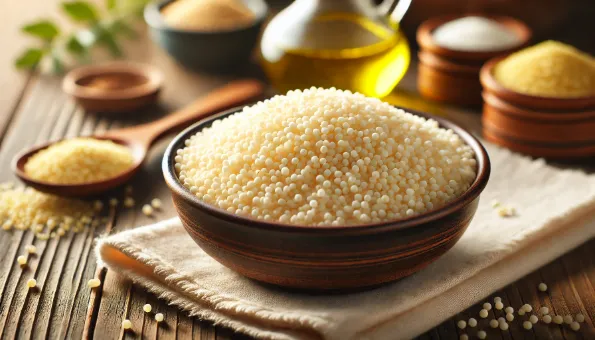
What Is Couscous?
**Couscous** is a type of small steamed granules made from crushed durum wheat semolina. It is a traditional North African dish often served with stews, meats, and vegetables.
Nutrition (per 100 g, cooked)
- **Calories:** 112 kcal
- **Carbohydrates:** 23 g
- **Protein:** 3.8 g
- **Fat:** 0.2 g
- **Fiber:** 1.4 g
- **Iron:** 0.6 mg
- **Selenium:** 15 µg
Health Benefits
- Source of **complex carbohydrates** for steady energy.
- Contains **plant-based protein** and **selenium**, an antioxidant mineral.
- **Low in fat** and easy to digest.
- Can be enriched with vegetables for a balanced meal.
Possible Drawbacks
- Made from **wheat**, so not suitable for **gluten-free diets**.
- Low in fiber compared to whole grains.
- Refined versions may **lack vitamins** found in whole grains.
Culinary Uses
- Used as a **base for stews, salads, and side dishes**.
- Excellent in **tabbouleh**, **Moroccan tagines**, or **roasted vegetable bowls**.
- Can be flavored with **olive oil, herbs, or spices**.
Summary
Couscous is a quick-cooking, versatile grain alternative that adds texture and nutrition to various meals.
- 1. Couscous
Couscous: sitno zrno napravljeno od durum pšenice, popularno u sjevernoafričkoj kuhinji; lagano, brzo se priprema i bogato složenim ugljikohidratima.