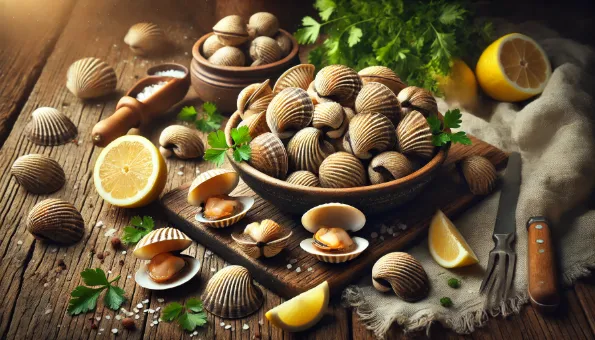
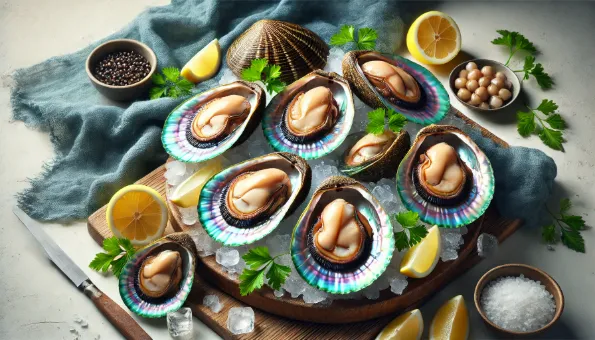
Clams are **bivalve mollusks** found in salt and brackish waters. Popular culinary types include **littleneck**, **manila (vongole)**, **razor**, and **quahog**. Their meat is sweet, briny, and tender when properly cooked.
Nutritional Profile (approx. per 100 g, cooked)
- **Protein:** high, ~20–25 g; **Calories:** relatively low
- **Micronutrients:** exceptionally high in **vitamin B12** (well over 100% DV), plus **iron**, **selenium**, **zinc**, **copper**
- **Omega-3s:** EPA/DHA present
- **Sodium:** higher in canned or brined products
Health Benefits
- **Lean protein** for muscle repair
- **B12 & iron** support red blood cells and energy metabolism
- **Selenium & zinc** contribute to immune function
- **Omega-3s** support heart health
Safety & Considerations
- **Shellfish allergy**: avoid if allergic
- **Food safety:** buy from reputable suppliers; discard cracked shells and any that **don’t close** before cooking or **don’t open** after cooking
- **Raw/undercooked risk:** vibriosis and other pathogens—pregnant/immunocompromised should avoid raw
- **Purines:** moderate–high → may aggravate **gout** in susceptible individuals
- **Environmental toxins:** avoid harvest during **red tide**; check local advisories
- **Canned** clams may be high in **sodium**
How to Prep & Cook
- **Purge sand:** soak in well-salted cold water 20–30 min; rinse; repeat if needed
- **Steam/sauté** with **garlic, white wine, butter, chili, parsley** (cook just until shells open)
- Classics: **linguine alle vongole**, **clam chowder**, **paella**, **clam bake**
- **Save the liquor:** strain through fine mesh/cheesecloth to remove grit—use for sauces and soups
Summary
Clams are nutrient-dense, lean shellfish with sweet briny flavor. Handle safely, cook gently, and enjoy in pasta, soups, or simple steam-ups.
1. Clams
clams – razne vrste jestivih školjki (npr. vongole, littleneck, razors); koriste se svježe ili konzervirane; odlične za kuhanje na pari, tjestenine i čorbe