

Microgreens: Tiny Leaves, Mega Nutrient Density
Just 25 g provides triple the vitamin C of mature lettuce, vibrant phytonutrients and fewer than 10 calories—perfect for boosting salads, smoothies or avocado toast.
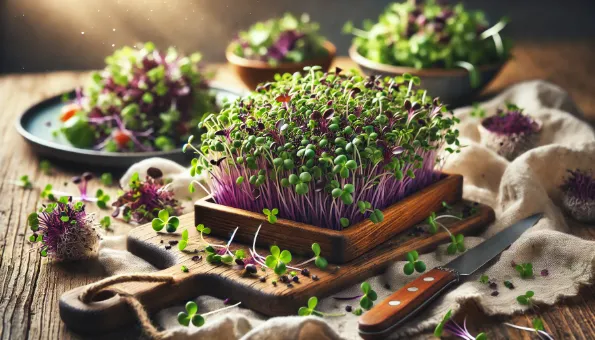
What Counts as a Microgreen?
Microgreens are fledgling vegetable or herb seedlings harvested **7–21 days after germination**, once the first true leaves appear. Because their metabolism is still in overdrive, they can contain **4–40 ×** more vitamins and antioxidants than their fully-grown counterparts.
Nutrition per 25 g mix (≈ 1 cup loose)
|Calories|Protein|Fat|Carbs|Fiber|Vit C|Vit K|Folate|
|---|---|---|---|---|---|---|---|
|9 kcal|0.8 g|0.1 g|1.4 g|0.8 g|35 % DV|60 % DV|18 % DV|
Why They’re a Super-Condiment
- **Concentrated antioxidants** (lutein, β-carotene, sulforaphane) support eye and cellular health.
- Higher **vitamin C & K** per gram than mature leafy greens.
- Delicate texture lets you add volume without weighing dishes down.
- Grown indoors year-round—local harvest means fewer nutrient losses.
Drawbacks & Safety Tips
- Warm, moist trays can harbour **E. coli or Salmonella**—buy from certified growers or sanitize seeds and use sterile soil when DIY sprouting.
- Pricier than full-size greens due to labour-intensive production.
- Wilts quickly; best eaten within **4–5 days** of harvest.
Smart Ways to Use Microgreens
- Scatter over omelettes or grain bowls just before serving.
- Blend into pesto to replace part of the basil for a peppery punch.
- Layer atop sushi or spring rolls for crunch and color.
- Garnish cocktails or mocktails—radish shoots add a wasabi-like zing.
Buying, Growing & Storage
- Look for **upright stems and vivid color**; avoid slimy patches.
- Grow at home: sow densely, mist twice daily, harvest with scissors at 5 cm tall.
- Store in a paper-towel-lined container at 4 °C; don’t wash until use.
- 1. Microgreens