

Pecans: Rich, Buttery Nuts with 20 g Healthy Fats & 60 % DV Manganese per Ounce
One 1-oz (28 g) handful supplies 196 kcal, 3 g plant protein, heart-friendly oleic acid and more antioxidants than any other common tree nut.
0.0(0)
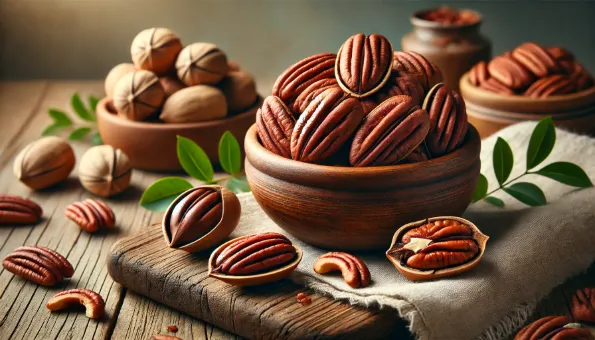
What Makes Pecans Special?
Native to the Mississippi River Valley, **pecans (*Carya illinoinensis*)** develop their signature buttery snap during a slow 2-year growing cycle. Their thin shells and high monounsaturated-fat content give desserts that “melt-in-the-mouth” quality—yet they shine equally in savoury dishes and salads.
Nutrition per 1 oz / 28 g (raw halves)
|Calories|Protein|Fat|Sat. Fat|Fiber|Manganese|Copper|Vitamin E|
|---|---|---|---|---|---|---|---|
|196 kcal|3 g|20 g|1.8 g|2.7 g|1.3 mg (60 % DV)|0.3 mg (33 % DV)|0.4 mg (15 % DV)|
Evidence-Backed Benefits
- **Oleic acid** (the same MUFA in olive oil) supports healthy HDL-to-LDL ratios.
- Highest **antioxidant capacity** among nuts—mostly ellagic & proanthocyanidins.
- **Manganese & copper** help collagen formation and blood-sugar regulation.
- Naturally free of gluten and dairy; terrific for keto & paleo snacks.
Drawbacks & Cautions
- **Energy dense**: a casual palmful is ~200 kcal—pre-portion if you track calories.
- Common **tree-nut allergen**—cross-contact possible in mixed facilities.
- High fat oxidises; store cold & dark to prevent rancidity (tastes like crayons).
How to Use Pecans
- Toast 8 min @ 175 °C for deeper flavour; cool before chopping.
- Blend with dates & cacao for a **no-bake brownie crust**.
- Swap into **basil-pecan pesto** when pine nuts are pricey.
- Crust salmon or tofu with crushed pecans + smoked paprika.
- Sprinkle candied pecan shards over oatmeal or roasted squash.
Buying & Storage
- Pick **unblemished halves**; darker speckles = age.
- Refrigerate up to **9 months** or freeze 2 years in airtight bags.
- If they smell paint-like, they’re rancid—compost, don’t eat.
- 1. Pecans
Comments
Povezani postovi
Bison Meat: Lean, Nutrient-Dense Red Meat
VeganImmunityHealthy Fats
Bone Broth: Slow-Simmered Collagen-Rich Stock
VeganImmunityHealthy Fats
Coconut Flakes: Crunchy, Tropical Topping
VeganImmunityHealthy Fats
Currants (Black, Red & White): Tart, Juicy Vitamin C Powerhouses
VeganImmunityHealthy Fats

Herbal Tea: Caffeine-Free Infusion for Relaxation & Wellness
ImmunityHealthy FatsOrganic
Guajillo Peppers: Fruity, Mild-to-Medium Dried Chilies
VeganImmunityHealthy Fats
Parsnips: Sweet, Nutty Root Vegetable
ImmunityHealthy FatsOrganic
Buttermilk: Tangy, Probiotic-Rich Milk for Baking & Drinking
ImmunityHealthy FatsOrganic
Abalone: Gourmet Sea Snail with Delicate Flavor
PescatarianImmunityHealthy Fats
Sticky Rice (Glutinous Rice): Perfectly Chewy, Sweet or Savory
VeganImmunityHealthy Fats